
Electric tractors are arriving in African, Middle Eastern and South American fleets on a schedule that most trailer suppliers have not adjusted to. The tractor changed. The trailer spec sheet did not.
That gap costs money in the first six months, in ways that are hard to attribute and easy to ignore: tyres wearing on one side, ABS warnings that clear on restart, brake chambers failing earlier than the service interval says they should.
None of it is a battery problem. It is a coupling and braking problem, and it is solved at the specification stage — before the trailer drawing is released.
Regenerative Braking Changes What the Trailer Brakes Do
On a diesel tractor, the engine brake and the trailer brakes share deceleration work in a ratio drivers learn and mechanics service to. An electric tractor does not share it the same way.
Regenerative braking puts most of the retardation through the drive axle. The trailer brakes then see far less continuous load — until they suddenly see more, on a long descent with a full battery, when regen tapers off because there is nowhere left to put the energy.
That transition is where standard trailer brake chambers underperform. A chamber sized for constant diesel-era duty can be overworked in the last third of a descent, and the driver feels it as a soft pedal rather than a failure.
What to specify instead: relay valve response matched to the tractor’s brake signal timing, and chambers rated for intermittent high-load braking rather than continuous light braking. Ask any trailer supplier whether they have specified for regen before. If the answer is vague, keep asking.
Fifth Wheel Height Is Not a Detail
Battery packs sit low and between the frame rails. That changes the tractor’s centre of gravity and, on some models, the deck height at the fifth wheel.
A trailer built to a diesel-era coupling height will sit slightly nose-up or nose-down. Neither looks dramatic. Both are expensive: load shifts onto the steer axle or onto the trailer’s rear axle, and tyre wear follows within a few thousand kilometres.
Measure the loaded fifth wheel height on the actual tractor before the trailer drawing is released. Not the number on the spec sheet — the measured one, with a full tank and a driver in the cab.
Payload: The Battery Is Not Free
A 350–400 kWh pack weighs several tonnes. Where legal gross weight is the binding constraint — and on most heavy duty truck for Africa routes it is — that mass comes straight out of payload.
It matters most in tipper and dump work, where the customer is paid by the tonne moved. It matters much less in volumetric cargo — a flatbed moving containers or steel usually runs out of deck space before it runs out of weight.
So trailer type often decides whether the electric tractor is viable at all:
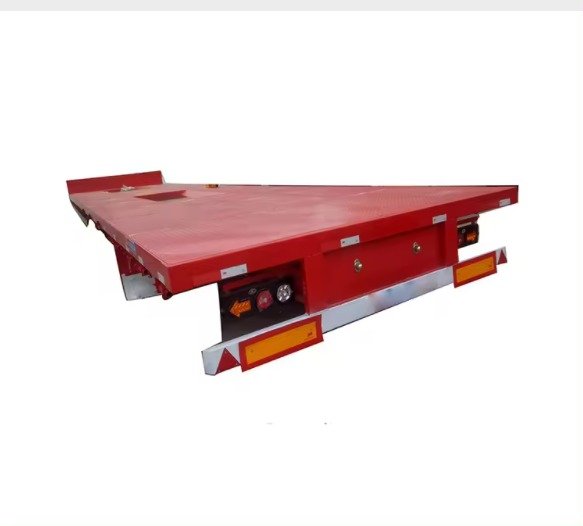
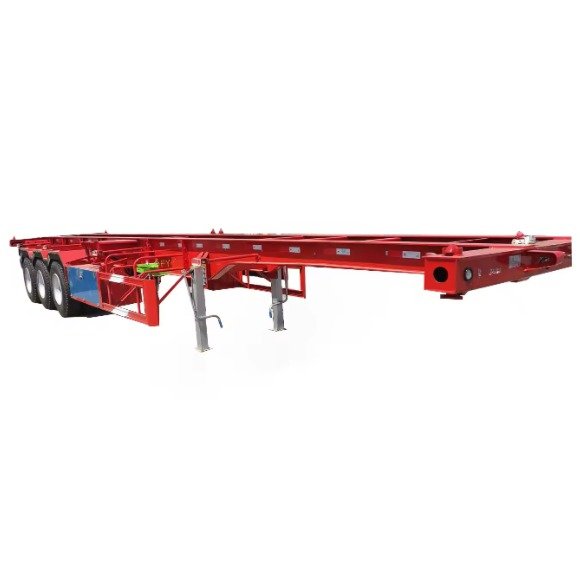
- Container chassis and flatbed work — volumetric, so battery mass rarely binds. The easiest first route to electrify.
- Dump and tipper work — payload-sensitive. Work out tonnes per cycle before quoting the route.
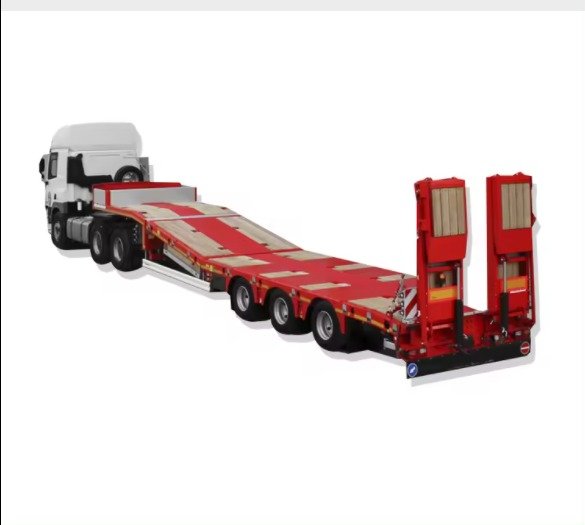
- Lowbed and heavy haul — the tractor is rarely the limiting factor; axle configuration is.
Matching the Right Trailer to Each Duty
Most fleet operators we work with start with one route and one trailer type, then expand. Where the first step is capacity rather than electrification, used trucks for export close that gap without a build lead time. Matching the two properly is what makes the second and third unit easy to justify.
Container chassis and flatbed. The lowest-risk starting point. Fixed port or rail cycles, predictable loads, and a trailer that is insensitive to a few hundred kilograms of battery. If the route is a steady container shuttle, this is where a first electric tractor earns its keep — and where a howo trailer built to the same coupling height pays for itself fastest.
Dump and tipper. The hardest case and the highest reward, because fuel burn per tonne is worst here. Payload discipline decides everything: specify lightweight body steel and check the axle loads with a full battery, not an empty one.
Lowbed and heavy haul. Electric tractors are increasingly used to move plant between sites, where the daily distance is short and the load is heavy. Trailer ramp angle and axle spacing matter more than the tractor’s range.
Parts and consumables. Brake chambers, relay valves and chambers seals are the parts that fail first after conversion. Ordering a small kit with the first trailer is cheaper than air-freighting one valve later.
Where Trailer Orders Actually Go Wrong
Three failures account for most of the problems we see on first shipments.
Drawing released before the tractor is confirmed. The trailer is built to a generic 6×4 height, the actual tractor arrives 40 mm different, and the fleet spends a year compensating with load placement.
Brake system assumed identical to diesel. Nobody asks about regen. The trailer works, but chamber life drops and nobody connects the two facts until the third replacement.
CKD packing planned after the steel is cut. Container loading for a semi-trailer is a design decision, not a logistics one. If the trailer is not designed to break down into a 40ft container, you pay for a flat rack or a break-bulk shipment.
None of these are expensive to avoid. All of them are expensive to discover.
FAQ
Can I use my existing trailers behind an electric tractor?
Mechanically, usually yes. Practically, check two things first: the loaded fifth wheel height, and whether the brake chambers are rated for intermittent heavy braking. Most existing fleets run fine after a chamber upgrade.
Does a howo trailer need a different spec for electric tractors?
The trailer structure does not change. The brake system, the coupling height and the axle load calculation do. Specify those three against the actual tractor and the rest of the drawing is normal.
Will the battery reduce how much I can carry?
On weight-limited routes, yes — by roughly the mass of the pack minus the diesel drivetrain it replaced. On volumetric routes it usually does not bind at all.
How long does a trailer order take?
Standard flatbed and chassis trailers typically ship within a few weeks of drawing approval. Custom lowbed and tipper builds take longer, and CKD packing adds a design step before production starts.
Next Step
Send us the tractor model and the route, and our export team will come back with the trailer specification that matches it — brake system, coupling height and axle loading included, not just a price.
WhatsApp: +86 133 5510 0219 Email: weierxin@wrxtruck.com